 Belgian artist Carl Brenders is an internationally recognized wildlife painter known for his exceptionally faithful and powerful rendition of nature.
Born in Wilrijk, Belgium, Carl Brenders first studied at the Fine Arts Academy of Antwerp and later at Berchem. He made his debuts in the art world as an illustrator for well-established European publishing companies. His illustrations of wildlife for the book series La vie secrète des bêtes (Hachette) were later published in English as Nature’s Hidden World. These books already show what was to become Carl’s trademark: the accurate capture of his subjects and their habitat.
Nature in all its diversity is Carl Brenders’s one and only inspiration. No subject is too humble or noble for him. He will paint with equal love and focus a cluster of ladybugs, a clutch of ducklings, a fox, a pride of lions or a small patch of lichen growing on a branch. Capturing nature’s wildlife in all its beauty and drama imparts Carl’s work with considerable and captivating variety. The meticulously detailed paintings, so striking in their tactile realism, express the artist’s philosophy that nature is perfect: “This is why I paint the way I do with so much detail and so much realism – I want to capture that perfection”.
All of Carl’s paintings derive from an extensive on site study of the fauna, flora and environment. He will personally take countless photos of the animal and its habitat, taking great care to document all the elements that will set the stage for his subject such as the vegetation at a particular time of year, the light, the relief of the landscape, the shape and color of the rocks… Only then will Carl let his imagination kick in, “the painting takes form in my mind and I make a few sketches.” His vision finally materializes in a detailed pencil drawing which he then projects to his illustration board making adjustments to his composition before applying color. Although Carl has experimented twice with acrylic paint, he remains partial to the technique he has developed over the last thirty years. His paintings, typically created on illustration board, are executed in a mixed-media combination of watercolor and gouache.
The powerful renditions of wildlife in all its spectrum, the mastery of details and the tactile realism Carl creates in his paintings irresistibly draw in the viewers, confronting them to a close encounter with an elusive and, sometimes, dangerous animal. Such vivid emotion caused by the artist’s capture of nature explains the popularity of Carl Brenders with the public and his stature in the art world.
Carl’s notoriety in the art world has been felt in many venues. In 2002 at the prestigious Birds in Art Exhibition organized by the Woodson Art Museum in Wausau, WI, he was honored with Master Artist status. He was also conferred the titles of Featured Artist and Guest Artist from the Southeastern Wildlife Exposition in Charleston, SC, the National Museum of Wildlife Art in Jackson, WY and Bennington Center for the Arts, VT. Carl Brenders’ paintings are present in prestigious permanent collections such as The Ford Collection in Dearborn, MI and those of the Woodson Art Museum and the National Museum of Wildlife Art. In 1998 he was inducted into the U.S. Art Hall of Fame. Outside the United States, his paintings received a lot of attention at major art auctions such as Christie’s, UK, Bonham’s in Singapore and Mondiale, LTD in Hong Kong. The high point of Carl’s career was a retrospective exhibition of 30 of his works entitled “Artistry in Nature: The Wildlife Paintings of Carl Brenders” which opened in 1997 at the Carnegie Museum of Natural History before traveling to the Cleveland Museum of Natural History, Cleveland OH, the Bernheim Museum & Arboretum in Louisville, KY and the Norton Art Gallery in Shreveport, LA.
Through the publication of magnificent prints of most of his works by his publisher, Mill Pond Press Companies of Venice, FL, Carl’s wildlife paintings have been made available to a wide public in North America but also .in Europe as well as Japan and Argentina. Carl can be seen in the Mill Pond Press video: Windows into Wilderness: A portrait of Carl Brenders.
Art publications have featured Carl Brenders in books such as More Wildlife Paintings Techniques of Modern Masters (Watson-Guptill Publications, 1996) and The Best of Wildlife Art (North Light Books, 1997), Wild: The Amazing World of Wild Animals (Harvest House Publishers, 2004). His art is also the main focus of Wildlife: The Nature paintings of Carl Brenders (Harry N. Abrams, 1994), Song of Creation (Baker Books, 2000), and Pride of Place: The Art of Carl Brenders (Langford Press, UK 2007).
The deep respect and admiration Carl feels towards nature and its wildlife does not only manifest itself in his works but also in his staunch defense of the environment in a world that has become more and more hostile to animals and vegetation. The passionate plea he enters in the statement he wrote for his Endangered Ambassadors, a rendition of two Bengal tiger cubs, is particularly moving and speaks of his commitment to the preservation of the environment. Carl, the artist, is also a fervent naturalist and environmentalist.
Although Carl sees himself as a mere artisan, world acclaimed and fellow wildlife Canadian artist Robert Bateman refutes such an assertion and writes: “Carl is, after all, from Flanders. He takes us out of doors and his birds and mammals are very much alive, but his art is part of that same great tradition. Carl is a Flemish master.”

 Nancy Dunlop Cawdrey lives in a world of color. And she likes to paint that way as well. Growing up quite literally around the world, Cawdrey found early inspiration in patterns and colors from places she has lived as a child and teenager, ranging anywhere from Syria to Germany. Studying studio art in Paris for two years as a college student, Nancy became attuned to Old Master techniques and found her voice through painting. After living for some years abroad in England and Europe with her husband Steve, eventually they found themselves returning to the United States and settling down in Montana.
 Canadian Audrey Casey began painting full time in 1980, after a 14-year career as a teacher. She was selected as one of a group of 19 wildlife artists from across Canada to participate in an exhibit at the Royal Ontario Museum celebrating Canadian wildlife. This led to her artwork being included in The Art of Survival, a book commemorating the show. Her work has appeared on the cover of Montana, in Artist Impressions and in a film titled “Brush with the Polar Bear.”
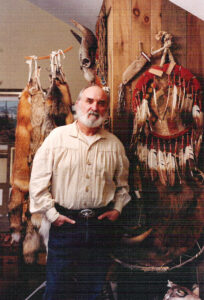 Paul Calle (1928-2010) was an artist whose work reflects the dramatic era of America’s Western heritage as well as the one in which he lived. For Calle, the dimensions of art can be as vast as the wild, wind-swept plains of the West, as infinite as outer space and as small as the historic scenes he captures on postage stamps for the United States Postal Service.
 Luke Buck, a native “Hoosier”, grew up in Indiana with a love for life, art, and nature that is evident in his nostalgic paintings of Americana landscapes and American wildlife. He was raised in a family of artists; his father, mother, one sister, and three brothers, all of whom were blessed with artistic talents from fine art, to music, and poetry.
 With over 30 years as an artist, naturalist and author, Carel Brest van Kempen’s artistic mission has always been to deepen awareness of the natural world and how it functions. His work has been exhibited worldwide in such venues as The Smithsonian, The American Museum of Natural History, The British Museum and The National Museum of Taiwan. He was named one of 100 “Most Honored Artists of Utah” (2002) and one of 14 “Master Signature Members” of the Society of Animal Artists (2008), who have awarded him their highest honor, the Award of Excellence, seven times. Artists for Conservation awarded him their Medal of Excellence in 2009. He has illustrated over a dozen books, including Dinosaurs of Utah (1998), Biology of the Gila Monsters and Beaded Lizards (2005), Biology of the Boas and Pythons (2007), Urban Herpetology (2008), and Conservation of Mesoamerican Amphibians and Reptiles (2010) and authored the popular coffee-table book, Rigor Vitae: Life Unyielding (2006). In addition to painting, he actively writes and blogs about natural history and conservation themes and serves on the board of Science Art-Nature, a Stanford-based non-profit devoted to “raising the prominence of Science Art and the benefits of combining the accuracy of science with the evocative power of art.”
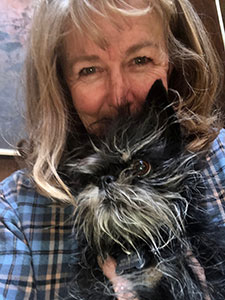 “A house isn’t a home until it has a dog and cat.” Dogs, cats, chickens, lambs, pigs and birds provide a never-ending parade of life at Amy’s home in Northern Colorado on the old family ranch. Her love of animals started at a very early age. At the age of 9, her parents gave her an orphan German Shepherd that she raised and showed in a 4H dog obedience competition, happily winning Champion! Later, she continued in that endeavor and was the 4H lead for dog obedience club where her daughter competed. Amy and her husband Lars continue to train German Shepherds. The very realistic, German Steiff animal toys were always on the Christmas list in the Brackenbury home. “It’s so funny that after all these years of admiring and collecting these toys and now I am a designer. I remember trying to carve an Ivory soap lion and just didn’t have the skill and now here I am, carving the prototypes for Fiddler’s Elbow. I finally have the hang of it!”
 Dave Barnhouse has never forgotten the values learned in his youth. He is a self-described ‘country-boy’ who grew up in small-town Richmond, Ohio, and Dave has no intention of leaving that environment either physically or emotionally. “I want my art to make people feel as though they were back home on a Friday evening experiencing the warmth of a cozy fire and smelling the homemade bread and cookies coming from the oven”. Dave’s paintings are snapshots of life the way he remembers it from the 1950’ and 60’s.
 Greg’s source of inspiration is the great outdoors and he enjoys the fact that near his home in Wisconsin, he has more beautiful scenes than he can paint in a lifetime. Equally comfortable with a range of wildlife subjects, artist Greg Alexander jumps with ease from fin to fur to feather and back again. Committing at least a third of his time to field research and reference photography, accuracy has become a trademark of Greg Alexander’s work. “Anatomical correctness is essential, but for me it is only part of what I strive for in terms of accuracy,” says the artist. “I want to reveal something about the personality of each species and not merely paint portraits.” Discipline and hard work have paid off for Greg. The winner of numerous conservation stamp competitions, today he is rightly considered one of the country’s finest wildlife artists. Greg was born in Sault Ste. Marie, Michigan, and currently makes his home in Wisconsin with his wife and children.