Bruce Miller – Wildlife

Born in Minneapolis in 1952, Bruce Miller showed signs of artistic talent at an early age,  Given a set of acrylic paints for seventh grade art class, he painted exclusively with acrylics until 1999, when he began painting with oils.
After high school, Bruce majored in art at St. Cloud State University and expanded his horizons as a world traveler. He returned to Minnesota to seriously pursue his art career in 1975. Miller experimented with a variety of genres including portraits, landscape, abstract and surrealism. Being an avid outdoorsman and Eagle Scout, in 1981 he began painting wildlife.

In 1988 he won his first national contest, Artist of the Year for the Michigan Wildlife Art Festival and since has won over 50 awards and been featured at several major art shows in the country.He has won 23 conservation stamps including the 1993 Federal Duck Stamp and recently the 2015 Texas Duck Stamp. And was named  the 1999 Ducks Unlimited International Artist of the Year, The National Wild Turkey Federation Artist of the Year 2008 and the Rocky Mountain Elk Foundation Artist of the Year in 2002 and 2011.  Miller’s work has generated over $10,000,000 for conservation. Conservation of wetlands being paramount in his life.

His work also has won critical acclaim, being selected for the Leigh Yawkey Woodson “Birds in Art” exhibition.  His paintings have won two ‘Award of Excellence’ honors, at the Natureworks art show in Tulsa.  He has also won two Artist Choice awards at the Artist Studio and Auction at the Calgary Stampede, most recently in 2014. He also does the Dallas Safari Club show in January and SCI in Las Vegas in February.  In 1999, Miller was moved by some  art he saw at The Museum of Russian Art in Minneapolis. He decided to switch to oil and attempt to paint in a more impressionistic manner. His work continues to evolve after years of intense study.

The city of his residence during the Federal Duck Stamp win in 1993 showed their appreciation for one of their own by dedicating a wildlife preserve, in Bruce’s name.

He was especially moved in 2012 by a once in a lifetime exibit of Nicolai Fechin at the Museum of Russian Art in Minneapolis. You will see the influence in his chicken portraits and cougar painting. He continues to evolve as all art does. And he continues to experiment with expressionistic techniques.

His passions outside of art are bird and duck hunting, and fly fishing. He will fly fish for anything he can, but his favorite sport is doing a canoe float and fly fishing for smallmouth bass with popper flies.


Bonnie Marris – Wildlife

Bonnie Marris has been studying and painting wolves, foxes, dogs and horses since childhood. She remembers her family home as a refuge for anyone in trouble, human or animal. “At one time we had two wolves and a three-month-old coyote living with us,” she recalls with a smile. Always, when Marris wasn’t around animals, she was painting them and this love led her to pursue degrees in zoology and animal behavior, studying predictors (wolves, big cats, bears, and foxes). Animals are an integral part of both her life and her art.

She cites David Shephard, the great British painter and preservationist, as her hero and mentor. His mastery of color and pure magic on canvas, she says, motivate her every day to become more skillful, to make an animal seem to step off the linen canvas so that viewers hold their breath in preparation for the meeting. If anyone has never had the opportunity to see a fox running through a field and stopping suddenly to listen for a mouse or to watch a pack of wild wolves at play, Marris wants to give that person some of the experience with a painting.

She also wants to let viewers see each animal she paints as an individual, to connect with its soul. “We all know that our dogs and cats have personalities and their own ways of being,” she says. “Well, this is also true of grizzlies, of horses, of wolves—all nature’s creatures. Once in Alaska, about thirty yards from my campsite, one wolf from a pack of twenty got down on her front elbows and wagged her tail at me in play mode. Another time a coyote spent a whole morning watching me watch a grizzly—and then hiked with me all afternoon and sat on a nearby hillside while I waited for more bears. A very grateful wild skunk once patiently let me clean caked mud off him after he had been stuck in a window well.

Studying color and light, Marris says, has become an obsession with her. “Color sets a mood, an atmosphere that can create feelings ranging from contentment to terror. There are colors within colors, too. The many colors in a shadow, for instance, convey cold or heat. The way light plays with the subject is also very important. Light may dance across snow or water, then lead the eye through the thick fur of a wolf’s neck or flash in the corner of a cougar’s eye. I’m fascinated by hue changes in light as it ages with the day.”

Marris is very much a loner, spending most of her time in the fields and woods with a horse or a dog. She does a lot of outdoor photography and sketching and tries to take one major field/research trip a year. Watching polar bears along Hudson Bay, grizzlies fishing in Alaska or elk sparring and bugling is thrilling, Marris says, but at the same time she finds herself impatient to get back to the studio to paint these sights. Then, back in the studio, she can’t wait to get outdoors again!

The passion Bonnie Marris has for wilderness, for animals and for light and color come together in her art and she feels her work has accomplished its purpose when a viewer feels that same passion.

Jack Paluh – Wildlife and Native American

Artist Jack Paluh (pronounced pa-LEW), resides in Northwestern Pennsylvania in the small borough of Waterford with his wife Marian and their three children living nearby. Jack was a “constant doodler” from the time he was old enough to hold a pencil. His teachers recognized Jack’s talents early and encouraged him to continue developing his art skills following high school. But being young, Paluh had other ideas and found work as a truck driver.

His life changed drastically, however, in the autumn of 1982, when he was injured in a hunting accident. “While I was bow hunting, my tree stand collapsed beneath me and I fell 20 feet to the ground, cracking a vertebra in my back,” Jack remembers, “but God was faithful, and provided me with an opportunity to find the silver lining in a very dark cloud.” Paluh is referring to his recuperation period when he painted a white-tailed deer painting titled Monday Morning. “That was nearly 30 years ago,” says Paluh, “and so began my career as a full-time nature artist.”

“All of nature continues to fascinate and inspire me. The older I become, the more I realize how intricate our natural world is created. I truly enjoy the time spent outdoors as it is my time to pray, dream and compose.”

Jack has received many honors in his career as a nature artist, but none more significant to him than meeting and talking with the people who have enjoyed and purchased his artwork. At an art show or during a chance meeting in passing, Jack is never too busy to answer questions about his paintings or swap a few hunting stories. Whether it is painting, hunting, photography or just observing, Jack’s natural sense of humor is ever present as well as his strong faith in God. “God has truly blessed me with a job that I love,” states Paluh. “My success is through His handiwork. He provides me with an amazing outdoors to paint and enjoy. I give Him all the credit.”

Jack is a dedicated bowhunter and naturalist. Many of his paintings have been created while sitting in his tree stand. Hunting is the lifeline of Paluh’s artwork. He is an avid turkey hunter and chasing white-tailed deer with a bow and arrow comes in a close second. In recent years, with the acquisition of his two black Labrador retrievers, he also has taken up duck and goose hunting. “Even on a hunting day that has been less than successful, I still return home with ideas. I file those ideas away and use them in future paintings,” states Jack.

For the last several years, Jack’s favorite workspace has been outdoors, using a technique called Plein Air Painting. Painting outdoors or “out in the open,” images are painted in a short period of time to capture lighting and color temperatures. This capture of natural light and color enables him to carry these small studies back to the studio and bring large paintings to life. On occasion, Paluh will put some of these Plein Air Paintings up for sale.

“I often sketch or paint outdoors first to capture color and setting,” states Paluh, “then move indoors to refine the painting. My goal is to have the viewer’s eyes flow comfortably through a piece and to draw them into the canvas. I want the person to feel as if they have visited the place I’m painting. The medium I use is oils on canvas or linen. The oil paints provide me with rich colors and a longer drying period to make changes on the canvas.”

In this artist’s heart, there is always another painting around the bend. Often people will ask Paluh which painting is his favorite. With a smile, he always states, “My next one!”

Heronim – American Folk Art

Harry Wysocki, (A.F.P.A.A.), AKA Heronim was prominent on the American art scene for many years. He was born in a Polish-American neighborhood in Detroit and later moved to Los Angeles, where he graduated from Art Center College of Design. Shortly after the end of World War II, Harry enlisted in the Merchant Marines and sailed the high seas to exotic ports, which became subject matter for his early works. In Japan he was commissioned to paint the History of the Army Airborne Engineers, which he executed in a series of six murals. Working with Japanese artists, he was inspired by the art of Hiroshige, whose influence is apparent in his early works. After returning home from Japan, he started experimenting with art nouveau and art deco styles.

His work has been exhibited in the Detroit Institute of Arts, the Museum of Science and Industry in Los Angeles, and the San Francisco de Young Museum. Numbered among his many accolades are nineteen national and local awards from print shows in New York, Chicago, Detroit, San Francisco and Los Angeles.  Three of his prints are now in the permanent collection of the Smithsonian Institute in Washington, D.C., as well as one painting in the United States Air Force Art Collection. He had one-man and group shows at the Charles Hecht Gallery in Palm Springs and Tarzana, the Nelson Rockefeller Gallery in Palm Springs, the Ester Wells Gallery in Laguna Beach, the Touche Gallery in Laguna Beach, the I.A.C. Gallery in Los Angeles, the Heritage Gallery in Beverly Hills, the Dyansen Gallery in Beverly Hills, and the Conacher Gallery in San Francisco.

Later in his career, Harry started to use his middle name, Heronim, on his Americana paintings.  His prints have been sold in every major country in the world. The Gold Leaf Corporation, official licensee of the Statue of Liberty Restoration Foundation, authorized him to create limited edition prints depicting the unveiling of the statue.  A commission by Life Magazine to paint a four foot by seventeen foot mural entitled Children of America was reproduced on seven pages in the John F. Kennedy Memorial Edition of the magazine, published on November 7, 1988. The original is now in the permanent collection of Nationwide Network Bank in Sacramento.

A dichotomy exists in Wysocki’s works as expressed by his ability to paint impressionism along with his fascination for nostalgia. His many collectors appreciate his diversity. He described his Americana paintings as nostalgia: a time before computers, hi-tech movies and fax machines, when traveling by horse and buggy were the mode of transportation. He would find a lighthouse, an old hotel, a railroad station, and then would begin historical research. He delved into archives, haunted old book stores, and talked to old-timers who remembered “the way things were”, and the painting began to evolve. The finished portrayal is history, nostalgia, and fantasy.

Richard Clifton – Wildlife

Richard Clifton was born in Delaware in 1961.  He lives on a historic family farm adjoining the Prime Hook National Wildlife Refuge, where he is surrounded by inspiration for his art.  He is a self-taught wildlife artist who has chosen acrylics as his medium.
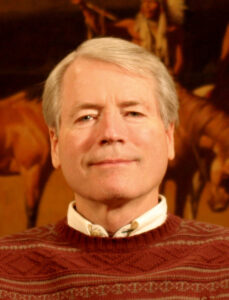
Waterfowl being one of his favorite subjects, he has gone on to paint 51 duck stamps from various states, including the 1996 Australian Duck Stamp and the 2007-2008 Federal Duck Stamp.  He has also been commissioned to paint the 2015 and 2016 South Carolina duck stamp.  His recent wins are 2017 Oregon and Nevada, and most recently the Delaware duck stamp for 2019.

Richard won the prestigious Federal Duck Stamp Contest for 2021-2022 with his painting Drake Lesser Scaup

Richard’s work has been displayed in many of the top wildlife art shows throughout the country, including the Southeastern Wildlife Exposition and the Easton Waterfowl Festival, to name a few.

His work has appeared on magazine covers, tee-shirts and a beer stein for Coors brewing company.  It has been engraved on shotguns for Ducks Unlimited, and other related products.  Richard’s work has been chosen several times for the D.U. National Art Package.  Also, he was named 2015 D.U. Artist of the Year and again for 2018. He has appeared on “D.U. TV” in an episode about his Wildlife Art, Conservation efforts and Waterfowl hunting on his farm.

He is a casual birder and an avid hunter of waterfowl, deer and upland game and uses his experiences in the field as inspiration for his work

Martin Figlinski – Tropical Landscapes

Martin Figlinski lives in Apollo Beach, Florida with his wife and two kids. He has lived in Florida his entire life and began painting at the age of fifteen.

Whether it be an old clapboard cottage, sun drenched palms, or a boat tied to a piling while waiting for adventure, Martin’s work reflects his longing for an Old Florida that once was. A time when things were a little simpler and life moved a bit slower. A time when tall tells were laughingly told while sipping iced tea on a front porch as day gives way to evening. A time when salty oysters were shucked in a back yard with friends and rustling palm fronds were music in the air. Martin hopes that his work takes us back to that special place in time. 

His paintings are full of lively brushwork and are rich in detail but often leave out just enough to allow us, the viewers, a chance to complete the story through our own lenses of life— much in the same way a good book becomes so uniquely personal to us.

The subjects in his work are often not exact places or scenes but instead his interpretations of things both seen and imagined.

David Mann – Native American

Glowing Landscapes and beautiful visions of moonlit figures radiating the simple, almost angelic postures of life have become the trademark of Southwestern Artist, David Mann.

Born in 1948 in Salt Lake City, Utah, the son of a professional writer and amateur artist, David Mann grew up in a creative environment accompanying his father to art shows, museums and on painting expeditions.  His father’s love of history and Western lore were imprinted on Mann as he developed a strong interest in Indian cultures and Western art.  He studied their histories, made replicas of their clothing and artifacts and enjoyed the magic that in his mind has always surrounded Indians.  As a child, he collected whatever Remington and Russell prints he could find, along with books illustrated by Will James, Paul Brown and Wesley Dennis.  A unifying thread of focus throughout Mann’s life has been his interest in Native Americans, horses and art.

Living in Arizona and New Mexico provided opportunities of working and living with San Carolos Apaches, Navajo and Pueblo tribes which left and indelible image of the Indian deep in his mind.  David came to know the Indians as introspective individuals, serene yet vulnerable.  Although attracted by their color and ceremony, he does not look upon them as decorative or showing figures.  He portrays them as patient dignified people unrushed by time and place. David does not seek to reproduce a moment in history or enter an unreal world, but rather would portray the aura of Indian mystery, color and magic within the framework of the believable impressions of his mind. Using Indian people as models, Mann seeks to capture that personal “moment of truth” in his paintings, paying careful attention to the details of clothing, saddles and jewelry.

David studied art at Weber State College, then worked as an artist for the State of Utah until his desire to express his impressions of the Southwest overcame the security of State employment.  The move to gallery art in 1983, although filled with challenges, has proved to be a happy one.

Mann has been an annual participant in the Altermann Galleries and Auctioneers sales and auctions and the Prix de West Invitational Art Exhibition and Sale in Oklahoma City, Oklahoma as well Masters of the American West at the Autry Museum of the American West in Los Angeles, California.  He has been featured in Art of the West, Art-Talk, Southwest Art, Persimmon Hill and Western Art Collector magazines, and is happy to be part of the Booth Museum Collection.  David Mann is represented by Legacy Gallery, Scottsdale, Arizona, Jackson, Wyoming and Bozeman, Montana.


Cole Johnson – Wildlife

Cole Johnson has lived in upstate New York his entire life and now resides in Deposit, New York, a small town in the Catskill Mountain region. Hunting, fishing, and spending time in “the woods” have been the preferred activities most of his life. Favorite subjects include the species he is intimately acquainted with in the field – the white-tailed deer, trout, turkeys, hunting dogs and waterfowl.

Although Cole did not study art in high school, he discovered he had a knack for sketching. By graduation, he was featured in a local student art exhibit. The encouragement led to a junior college program in Fine Art at the Munson-Williams-Procter Institute of Art in Utica, New York, an art curriculum associated with the Mohawk Valley Community College.   Cole

completed his BFA with a concentration in Painting at the State University of New York at Buffalo in 1991.

Although he has worked in oils, Cole prefers to work in graphite powder. “The contrast of black and white appeals to me,” says Cole. “I enjoy the challenge of making a drawing come to life based solely on tonal value.”   Incorporating the powdered graphite into his work creates a softness otherwise unobtainable, and gives a distinct “mood” to many pieces. Use of the eraser as a tool in later stages of the drawing allows reintroduction of light and depth. Close-up, detailed portraits of deer, dogs, waterfowl and birds of prey are favorite pieces. Cole generally produces works in his Smithville Flats studio after close observation in the field and taking of numerous photographs whenever possible.

In addition to numerous local and regional shows, Cole continues to broaden his exposure nationally by attending shows such as the Southeastern Wildlife Exposition in Charleston, South Carolina and the Waterfowl Festival in Easton, Maryland.   In 1998, Cole was inducted into the Society of Animal Artists, a prestigious group of animal artists devoted to “promoting excellence in the portrayal of creatures sharing our planet.”

In addition, Cole has been juried into such prestigious exhibits as Birds in Art, Leigh Yawkey Woodson Art Museum and the National Arts for the Parks Competition where he was chosen Region 1 winner and received a Judges Award of Merit.

William Biddle – Nostalgic Landscape and Architecture

1937-2023

Born with a paint brush in his hand in 1937, William Biddle (Bill) was raised in Hamilton, Ontario.  With his talent quickly discovered, at the age of 14, Bill packed his bags and moved on his own to study drawing and painting at the Art Students League in New York, N.Y. and at the American School of Design.

For 23 years he taught at the Ontario College of Art and Design in Toronto, Ontario, as well as the Mississauga Visual Arts Centre, the Oakville Art Centre, and taught classes in drawing, acrylics and watercolours at the Dundas Valley School of Art.  He continued teaching and working full time right to the end at his gallery located in Dunnville, Ontario where he thoroughly enjoyed the friendships built over the many years and his involvement with Paddles of the Grand.  Bill was also known for the many book covers and illustrations featured in the Harlequin romance book series, calendars as well as “Great Moments in Canadian Sports” on display at the Sports History Museum in Vanier City.

When he wasn’t sketching his next project, he could be found working hard (or sleeping) in his garden, watching sports or making mediocre dad jokes.  Over his life, he was a man of many activities including skiing, squash, baseball, hockey, running and trying to keep up to his cherished wife, Pam.

If you asked Bill what he did for a living, he would simply say he painted houses. 

Andrew Denman – Wildlife

“In the increasingly crowded field of wildlife artists, Andrew Denman stands out for his distinctive look in addition to his masterful painting skill” writes veteran art writer and magazine editor Jennifer King in a 2008 editorial for Create Better Paintings.com.  Denman primarily paints wildlife and animal subjects in a unique, hallmark style combining hyper-realism with stylization and abstraction.   His dynamic and original acrylic paintings can be found in museum collections on two continents and in numerous private collections in the USA and abroad.  His clear voice, unique vision, and commitment to constant artistic experimentation have positioned him at the forefront of an artistic vanguard of the best contemporary wildlife and animal painters working today.

Denman holds a BA in Fine Arts from Saint Mary’s College in Moraga, CA.  He is well known in the San Francisco Bay Area as both an artist and teacher, and he has gained international attention through major gallery showings, numerous museum exhibitions in the US and overseas, artist workshops and speaking engagements, and feature coverage in such publications as Southwest Art, Western Art Collector, International Artist, The Artist’s Magazine, American Artist, and Wildlife Art, among others.

Born in 1978, the Bay Area native showed a great degree of interest in art from an early age.  Denman organized his first one man show in high school at a local library, and soon after began participating in exhibitions with Pacific Wildlife Galleries in Lafayette, CA, alongside leading figures Robert Bateman, Carl Brenders, and John Seerey-Lester.   Andrew went on to hold four successful solo exhibitions at Pacific Wildlife before moving to Trailside Galleries in 2008.   Denman is currently represented by Astoria Fine Art in Jackson, WY, Creighton Block Gallery in Big Sky, MT, Huey’s Fine Art in Santa Fe, NM, The Gallery at Sculpture by the Lakes in Dorset, England, Picture This in Alberta, Canada, and The Greenwich Workshop in Seymour, CT, which has produced limited edition giclée canvases of the artist’s work since 2011.  The artist maintains Denman Studios at his Antioch, CA, home, which he shares with partner and fellow wildlife artist Guy Combes.

Denman’s work has toured nationally with the Andrew Denman: The Modern Wild, a solo retrospective curated and directed by Dr. David J. Wagner, the highly regarded Birds in Art exhibition, and the Society of Animal Artists, which has thrice honored Andrew’s work with Awards of Excellence.  The artist is a regular participant in the highly competitive Western Visions Exhibition at the National Museum of Wildlife Art in Jackson, Wyoming, an institution that named him the Lanford Monroe Memorial Artist in Residence for Winter of 2009.  Denman’s work can be found in the National Museum of Wildlife Art, The Leigh Yawkey Woodson Art Museum, Wausau, Wisconsin, the Arizona-Sonora Desert Museum, Tucson, AZ, the Nature in Art Museum, Gloucester, England, and numerous private collections around the world.  The artist is a member of the Society of Animal Artists, NY, and The International Guild of Realism, AZ.

Whether painting an animal in its natural habitat or juxtaposing it against an abstract background, Denman goes to great lengths to faithfully portray his subjects, taking frequent field trips into wild places the world over, nature areas, parks, and zoos to observe his subjects and acquire reference material.  Yet while accuracy is always of great importance, Denman is an artist before he is a naturalist.  The sense of fearless experimentation and originality he brings to his paintings testifies to the artist’s true focus.  As Mary Nelson writes in the Nov/Dec 2004 issue of Wildlife Art magazine, “In the end, it’s not the mood, the meaning, or the method that Denman craves.  It is the medium-art.”


Top